Senior Only Product Teams: What They Are and When Startups Need One
The people in the pitch and the people on the build are not always the same. Here is what a senior only team changes for a young product, when it is worth it and how to tell the real thing from a sales line.
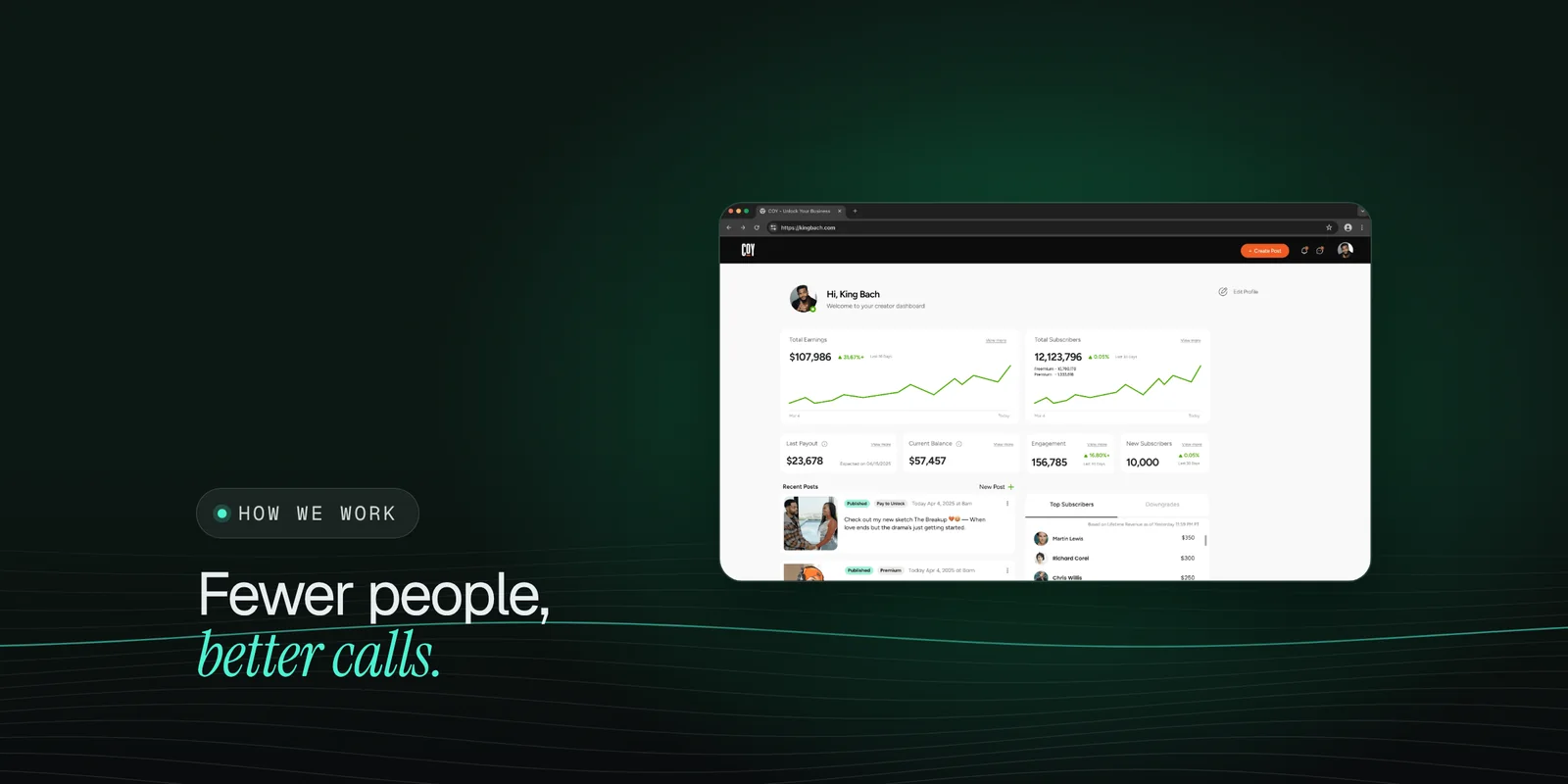
A senior only product team is a small crew where every person who touches the work has done that job many times before: the product lead, the designer and the engineers. Nobody is learning on your budget, and nobody is waiting for someone else to make the call. For a first product, where most of the work is deciding what to build, that matters more than headcount, hours or any tool.
This piece covers what senior only actually means, why it matters most before product market fit, how a team like this is structured, when you do not need one and how to check that a studio is senior in practice, not only in the pitch. It comes from how we staff our own work: every AI MVP we build is run by one senior crew from design through code.
What a senior only product team actually means
Most agencies and studios use a pyramid. A senior person sells the work and reviews it, and a larger layer of mid-level and junior people does most of the building. That model is not wrong. It is how many firms train people and keep prices down. But it puts a gap between the people who understand your problem and the people making hundreds of small decisions about it every day.
A senior only team removes the pyramid. In practice that means:
- The people you meet are the people who work. The product lead on the scope call is the product lead in the daily review.
- Everyone can own a decision. A senior designer can choose between two onboarding flows without waiting for approval. A senior engineer can say a feature is a two week risk and propose a one day version.
- Fewer people, fewer handoffs. A crew of a few senior people often replaces a much larger mixed team, because less time goes into explaining, reviewing and redoing.
What it does not mean is a crowd of expensive titles. Senior only is about judgment per person, not the number of people with "lead" on their profile.
Why it matters most on a first product
Early on, the hard part is not typing code or drawing screens. It is choosing: which user to serve first, which flow carries the product, which feature to cut so the first version ships. Those choices happen constantly and in small pieces, inside a ticket, a component or a database table. When the person making them has seen the same tradeoff a dozen times, the product gets simpler and faster to build.
AI coding tools have made this gap wider, not smaller. They let anyone produce a lot of working looking code quickly. What they do not supply is the judgment to know which code should exist, how it should be structured to survive real users, and when a generated shortcut will cost you later. We wrote about that line in vibe coding vs a production MVP, and about how teams are putting agents to work in our piece on AI coding agents for startups. In both cases, the tools speed up whoever is holding them. A senior engineer with good tools ships more of the right thing. A junior engineer with the same tools can ship more of the wrong thing, faster.
Steve Carroll, CEO of Findigs, described the effect of an embedded senior crew this way: "Bringing in King Tide's design team let us move twice as fast without compromising quality. They owned projects end-to-end and brought a level of craft that elevated everything we put in front of users."
How a senior only product team is structured
For a focused first product, the shape is small and stable. Ours is a product lead, a designer and engineers, working as one crew from scope to launch:
- Product lead. Owns the scope, the tradeoffs and the timeline. Runs the scope call, decides what is out, and keeps the product to one clear job.
- Designer. Owns flows, UI and a lightweight design system. Reviews work live with the founder during the design sprint instead of sending files over a wall.
- Engineers. Own the full stack: web or mobile apps, APIs, auth, payments, data and the AI pieces that sit in the core workflow. They build with AI-accelerated engineering, and they own what the tools produce.
The important part is that there is no handoff between a design shop and a dev shop. The designer and the engineers are in the same reviews, so a design that would take three weeks to build gets caught on day two, not in week six.
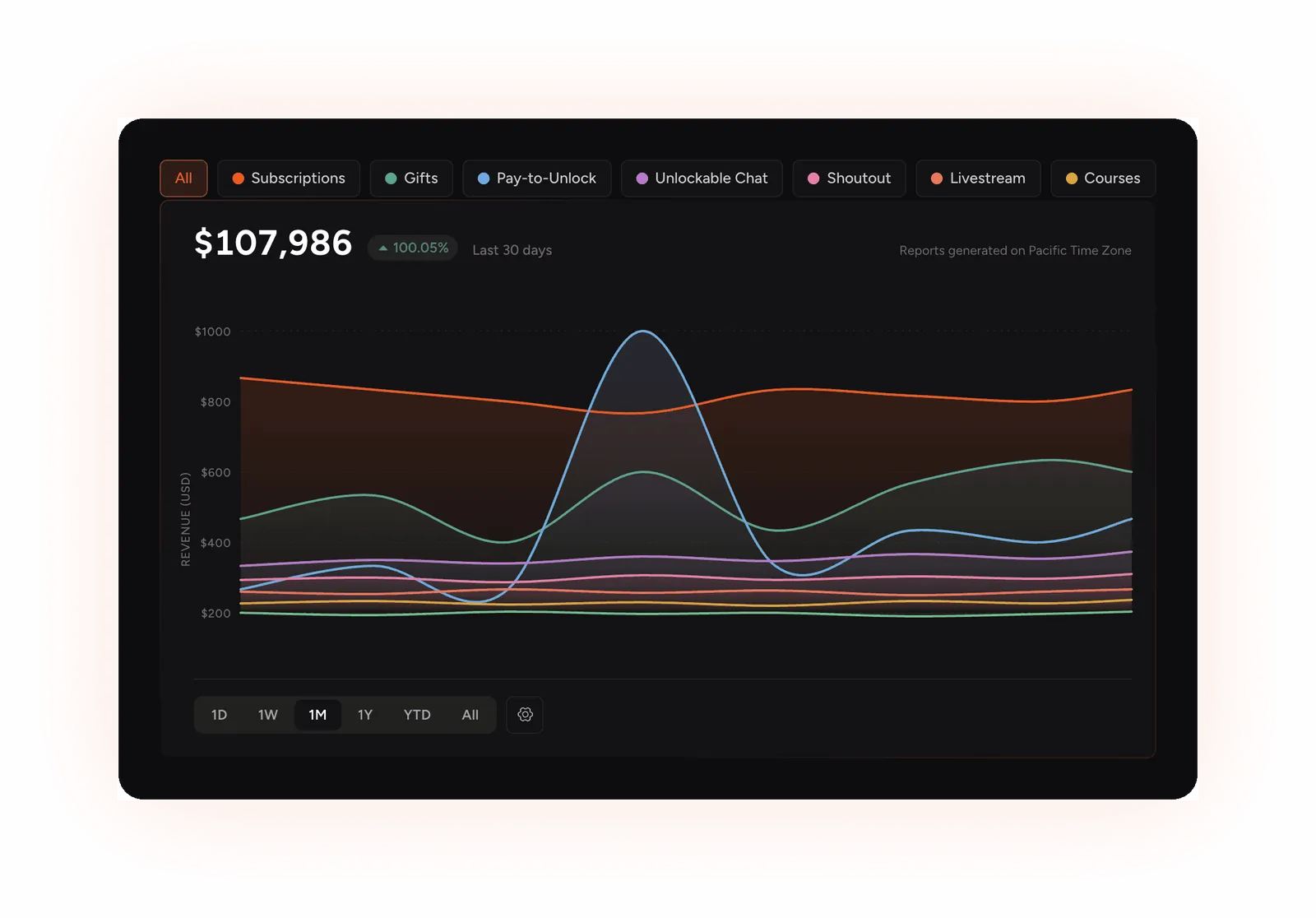
That structure is why a fixed scope, price and date are possible at all. Our AI MVPs go live in 30 to 60 days, start at $4,999 for a focused first version, and a full AI MVP is usually around $15K. The crew also ramps down when you hire, so the team does not become a permanent dependency. COY Creator is one example of the full shape: as early investors and product partners, we led brand, UX and UI, and web and mobile development with one crew.
 Case study · COY CreatorCreators call the shots.See the work
When you do not need a senior only team
Senior only is not always the right answer, and it is worth being honest about that.
After the decisions are made. Once a product has a design system, an architecture and in-house leads who own direction, a lot of the remaining work is well defined: more screens in an existing pattern, known bugs, routine integrations. Mid-level and junior people do that work well with good review, and it is a sensible way to grow a team.
When you need volume more than judgment. Large content production, QA passes and repetitive asset work rarely need the most experienced person in the room.
When the hourly rate is the only number that counts. Senior people cost more per hour. If you compare only rates, a mixed team will look cheaper. The fairer comparison is the total cost and time to reach a working first version, including rework.
There is also a middle path for ongoing work. A monthly design team gives you senior product, brand and web designers inside your sprints from $3K a month, usually embedded and shipping within a week, without committing to a full product build. If you are weighing that against a full-time hire, our guide to design subscriptions vs hiring a designer lays out the costs.
How to tell if a studio is really senior only
Nearly every studio says its team is senior. These questions show quickly whether it holds up:
- Who exactly will work on my product? Ask for names and roles, and ask to meet them before you sign.
- What has each of them shipped? Look for products that are live with real users, not only concepts.
- Who makes product decisions day to day? If every decision routes back to one person who is spread across ten clients, the team is not senior in practice.
- How often will I see working software? Senior teams show progress early and often, because they are confident in it.
- What happens when you disagree with me? A senior team will push back on scope with reasons. A team that says yes to everything is either not senior or not paying attention.
We cover more of the contract side, including the gap between who pitches and who builds, in fixed price vs time and materials. Long engagements are another good signal. Inspired started with King Tide building its first Shopify app and core web app, then kept us on as its engineering team for two years.
The takeaway
Pay for judgment where the decisions are still open. For a first product, that means a small senior only product team that owns scope, design and code together, shows you working software often and steps back when you are ready to hire. Once the product has its footing, mix in more people and let your own leads set direction. If you want a senior crew to scope your first product with one price and one date, book a scope call.
Questions founders ask
What is a senior only product team?
A senior only product team is a small crew where everyone who touches the work, from product lead to designer to engineers, has done the job many times before and can own decisions without close supervision. There is no layer of juniors doing the work while seniors review it.
Is a senior only team more expensive?
Per hour, usually yes. Per product, often not, because senior people make fewer wrong turns, need less coordination and skip most of the rework. The useful comparison is the total cost to reach a working first version, not the hourly rate.
When does a startup not need a senior only team?
Once a product has found its footing and has in-house leads, well defined production work like building more screens from an existing design system or fixing known bugs can be done well by mid-level and junior people with good review. Senior only matters most when the decisions are still open.
How can I tell if an agency is really senior?
Ask who exactly will do the work, ask to meet them before you sign, ask what each person has shipped before and ask who makes product decisions day to day. If the people in the pitch disappear after kickoff, the team is not senior only.