Fixed Price vs Time and Materials: How to Pay for Your First Product
The way you pay a studio shapes what gets built, who carries the risk and how fast decisions happen. Here is how to choose between a fixed price, hourly billing and a monthly team.
Fixed price vs time and materials is one of the first decisions a founder makes when hiring a studio to build a product, and it shapes far more than the invoice. A fixed price puts the risk of the work running long on the studio and forces a tight scope. Time and materials keeps the scope open and puts the risk on you. For most first products with one clear job, a fixed price is the better fit. For work you cannot define yet, hourly or monthly billing is more honest.
This piece covers how each model works, when each one fits, the third option most founders forget, and what to check before you sign. It comes from how we price our own work: every AI MVP we build has a fixed scope, price and date agreed before we start, while our design team runs month to month.
How fixed price and time and materials actually work
Fixed price
You agree on a defined scope, a price and a delivery date before any work starts. If the work takes longer than planned, that is the studio's problem, not yours. In exchange, the studio needs the scope written down precisely, and changes go through an agreed process instead of a quick message.
The upside for a founder is certainty. You know the number, so you can plan a launch, a runway and a raise around it. The less obvious upside is discipline: a fixed price forces both sides to decide what the first version really is before anyone writes code.
Time and materials
You pay for the hours people actually work, usually at an agreed rate per role, billed weekly or monthly. There is often an estimate up front, but it is a forecast, not a promise. The scope can change at any time, and the bill moves with it.
The upside is flexibility. You can learn something on Tuesday and change direction on Wednesday without renegotiating anything. The risk is that the total has no ceiling unless you set one, and nobody on the vendor side is paid to say "let's not build that."
Fixed price vs time and materials: which fits a first product?
The honest answer depends on how well you can describe the work today.
A fixed price fits when the product has one core job, one main type of user and a clear definition of done. That describes most good MVPs. If you can explain in a sentence what the first version does and who it is for, the work can be priced. This is why we scope one product on day zero and lock the price and timeline on that first call, as described in what happens on a scope call.
Time and materials fits when the work is discovery by nature: research, technical spikes into an unknown system, or a long tail of fixes and improvements after launch. Forcing a fixed price onto unknowable work just moves the uncertainty into padding, and you pay for the padding either way.
Watch for the trap in between. A founder who cannot describe the first version yet often reaches for hourly billing so the team can "figure it out as we go." That usually means paying senior rates to make product decisions slowly. It is cheaper to spend a short session deciding the scope, then build it at a fixed price.
The third option: a fixed monthly team
Many founders compare only two models and miss the one that fits ongoing work best: a set monthly fee for a set amount of senior capacity, with the work inside it changing every week.
This is how our monthly design team works. Plans start at $3K a month, a senior designer is usually embedded and shipping within a week, and you can pause or scale between sprints. You get the predictable bill of a fixed price and the flexibility of time and materials, as long as your backlog is steady enough to keep the capacity busy.
It fits teams that already have a product and need product design, brand and web work every week. Sunrun uses King Tide as an embedded design team for web, social and campaign visuals on an ongoing basis. If you are deciding between a monthly team and a full-time hire, our guide to design subscriptions vs hiring a designer puts the costs side by side.
Engagements can also change shape over time. Inspired started with King Tide building its first Shopify app and core web app, then kept us on as its engineering team for two years. Its CEO, Steve Ready, put it this way: "They were always flexible with their engagement structures, had awesome devs ready to jump in and out of Inspired, and saved us from having to staff up too much internally while we were finding product-market fit."
What makes a fixed price honest
A fixed price is only as good as the scope behind it. Before you sign one, check for these:
- A written scope with a definition of done. Not "a marketplace app," but the flows, the platforms and what has to work at launch. If it fits on a napkin, it will be argued about later.
- A change process agreed up front. The best version is simple: swap a feature for one of similar size, or quote the new work separately and add it to the plan. The original price and date stay intact.
- What is included after launch. App Store submission, analytics, onboarding and a handoff of clean repos and docs should be in the scope, not surprises at the end.
- Who owns the code. You should own it from day one, not after the last invoice clears.
- Visible progress. A fixed price does not mean disappearing for two months. Ask how often you will see working software.
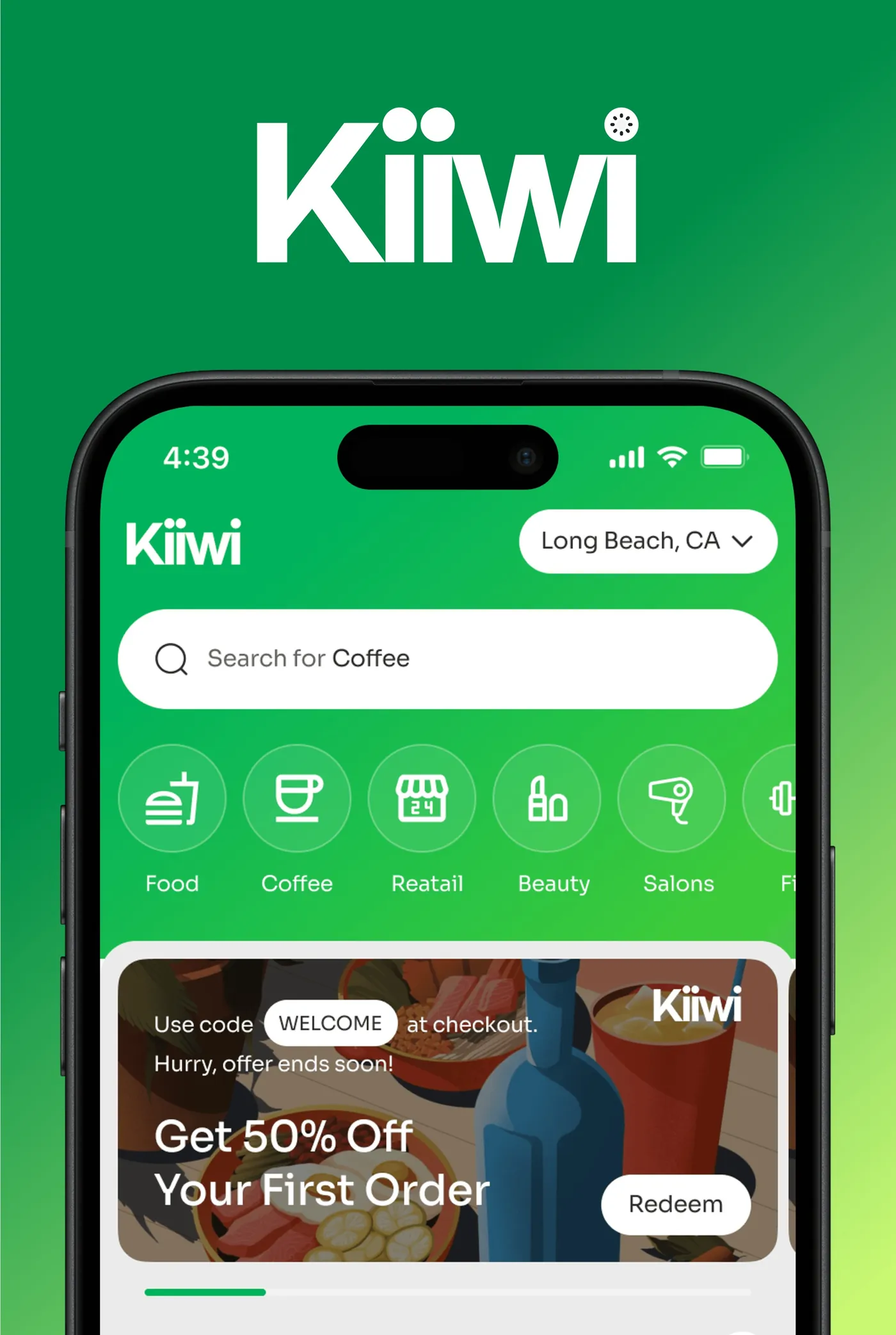
Our own AI MVPs follow that shape: one product, one price and a fixed timeline agreed before we start, a design sprint in the first week, then an AI-accelerated build with progress you can see every day. MVPs start at $4,999 for a focused first version, and a full AI MVP is usually around $15K. Our guide on how much it costs to build an MVP covers what moves that number. KIIWI went from concept to launch this way, with King Tide on product design and engineering.
 Case study · KIIWIDiscover local. Support local. Grow local.See the work
Questions to ask any studio before you sign
Whatever model a studio proposes, these questions show quickly whether it will work for you:
- What exactly is in the first version, and what is explicitly out? The out list matters as much as the in list.
- What happens if we change our minds in week three? Listen for a clear process, not "we'll figure it out."
- On time and materials: is there a cap, and who decides when we hit it? A budget ceiling with a check-in before it is reached turns an open tab into a managed one.
- Who does the work? Senior people in the pitch and junior people on the build is the most common gap between a quote and a result.
- What does the handoff look like? Repos, documentation and a path to your first hires, so the product does not depend on the studio forever.
If the work will lean heavily on AI coding tools, it is also worth asking how the code is reviewed. Speed only helps if someone senior owns the result, which is the line we draw in vibe coding vs a production MVP.
Paying with equity: a fourth path
Some founders ask whether they can trade part of the bill for equity. Sometimes that works. King Tide invests $25K to $100K in early-stage startups and trades discounted design and engineering for equity when the fit is right. It is not a way to avoid deciding the scope, though: the product still needs a clear first version, and the equity conversation goes better when both sides know what is being built.
The takeaway
Pick the payment model that matches how well you know the work. If you can describe the first version in a sentence, ask for a fixed price with a written scope, a change process and code you own from day one. If the work is discovery or ongoing iteration, use time and materials with a cap, or a fixed monthly team. Either way, the scope decision is worth more than the contract type. If you want a senior crew to scope your first product and give you one price and one date, book a scope call.
Questions founders ask
What is the difference between fixed price and time and materials?
A fixed price contract sets the scope, the price and the date before work starts, so the studio carries the risk of the work taking longer. Time and materials bills for the hours actually worked, so the scope can change freely and the client carries the risk of the total going up.
Is fixed price or time and materials better for an MVP?
For a first version with one clear job, a fixed price usually fits better: it forces a tight scope and gives you a number you can plan a raise around. Time and materials fits work where the scope cannot be known up front, like research or ongoing iteration after launch.
What happens if the scope changes on a fixed price project?
A good fixed price contract says how changes work before they happen. Usually you swap a feature of similar size, or the new work is quoted separately and added to the plan, so the original price and date stay honest.
Is a monthly design subscription fixed price or time and materials?
Neither exactly. You pay a fixed monthly fee for a set amount of capacity, and the work inside it changes week to week. At King Tide, design team plans start at $3K a month and can be paused or scaled.