Mistral Large 4 Goes Open: What LLM Costs Mean for Your Startup
On October 29, Mistral released open weights for its trillion-parameter Large 4 model, with low API prices to match. Here is how a founder should think about model costs before the first user signs up.
LLM cost for startups just got another reset. On October 29, Mistral released open weights for Mistral Large 4, a trillion-parameter model, and listed API prices low enough that the model bill for many first products drops to a rounding error next to engineering time. The catch is that cheap tokens do not make a product cheap to run. How you design the feature decides most of the bill, long before you pick a model.
This piece covers what Mistral shipped, where the money in an AI product actually goes, how to estimate your bill on a napkin, and when open weights are worth the trouble. It comes from how we plan the AI inside every AI MVP we build: the model is a line item we design around, not a surprise we find after launch.
What Mistral released this week
Mistral's announcement and TechCrunch's coverage set out the parts that matter to a founder:
- Open weights for a frontier-size model. Mistral Large 4 is a mixture-of-experts model with about one trillion parameters, first released in public preview earlier in October. The weights are now on Hugging Face.
- A permissive license with one condition. Mistral describes its open-weight license as a modified MIT license: free to use, modify, fine-tune and commercialize. Businesses that sell the model itself as a service need a separate commercial license.
- Low API prices. Mistral lists $0.70 per million input tokens, $0.07 per million cached input tokens and $2.10 per million output tokens.
- Many ways to run it. The Mistral API, OpenRouter, NVIDIA-hosted endpoints and Microsoft Foundry, or your own servers with vLLM, SGLang or an NVIDIA container.
- Coding and security focus. Mistral positions the model for agentic coding and cyber defense, with three reasoning levels: Low, Medium and High.
The headline for a startup: strong models now come both as cheap APIs and as weights you can own.
LLM cost for startups: where the money actually goes
A model bill is three numbers multiplied together: tokens per request, requests per day and price per token. Founders tend to fixate on the third. The first two are where the product decisions live.
Input tokens are mostly context you chose to send
Every request carries a system prompt, the user's message and whatever context you add: retrieved documents, chat history, a user profile. A feature that pastes a whole contract into every call costs many times more than one that retrieves the three relevant paragraphs. Retrieval design is cost design.
Output tokens cost more and grow quietly
Output is usually priced higher than input. On Mistral's list it is three times the input price. Long answers, verbose reasoning and agents that think out loud all spend output tokens. Higher reasoning levels tend to produce more tokens, so a reasoning setting is also a pricing setting.
Agents multiply everything
A chat reply is one call. An agent that plans, calls tools, reads results and retries can make ten or twenty calls for one user action, each carrying the growing conversation as input. If your product runs agents, estimate per task, not per call.
The bill nobody budgets for
Evaluation runs, staging traffic, retries after timeouts and engineers testing prompts all burn tokens. So do AI coding tools, which we covered in what AI coding agents mean for startups. None of it reaches a user, all of it shows up on the invoice.
How to estimate your LLM bill before you build
You can estimate the model cost of a feature in five minutes, before writing code. Here is a worked example using Mistral's listed Large 4 prices. The usage figures are illustrative, not from a real product.
Say a feature sends 2,000 input tokens and gets back 500 output tokens per request:
- Input: 2,000 tokens at $0.70 per million is $0.0014.
- Output: 500 tokens at $2.10 per million is $0.00105.
- Total: about $0.0025 per request.
At 10,000 requests a day, that is about $24.50 a day, or roughly $735 over 30 days.
Now suppose 1,500 of those input tokens are the same instructions on every call, and they are served from the cache at $0.07 per million. The request drops to about $0.0015, or roughly $450 over 30 days. That is close to 40 percent off from one design choice, before touching the model.
Run the same math for your own product with three inputs: tokens in, tokens out, and requests per active user per day. Then multiply by the users you expect in month one and month six. If the month six number scares you, fix the design now, while it is cheap to change.
Open weights or an API: when self-hosting makes sense
Open weights are a real option now, not a hobby project. They are rarely the cheapest option for a startup's first version.
Call a hosted API when you are still finding product-market fit, usage is small or spiky, and nobody on the team wants to run GPU infrastructure. You pay only for what you use, and you can switch models in an afternoon.
Consider open weights when your customers require data to stay in their environment, you are in a regulated space, usage is large and steady enough to keep hardware busy, or you need to fine-tune deeply. A trillion-parameter model needs data center GPUs and someone who knows how to serve it, so most teams that self-host start with smaller open models.
Check the license either way. If your product is essentially access to the model, Mistral's terms call for a separate commercial license. If the model powers a feature inside your product, the open-weight license covers commercial use.
The quiet benefit of open weights is a way out. If a hosted provider changes prices or terms, a product built against a standard interface can move to an open model without a rewrite. Keep that door open from day one.
Five ways to cut LLM costs without hurting the product
- Send less context. Retrieve the relevant passages instead of whole documents, and trim chat history to what the next answer needs.
- Cache the repeated parts. Put stable instructions first so they can be served from the cache, and keep them stable between releases.
- Route by difficulty. Use a small, fast model for classification, extraction and formatting, and save the large model for the hard reasoning.
- Cap the output. Set maximum lengths, ask for structured output instead of prose where a screen will render it anyway, and choose the lowest reasoning level that passes your tests.
- Measure cost per user action. Log tokens and cost next to every feature from the first week. A dashboard that shows cost per document processed or per chat beats a monthly invoice you read too late.
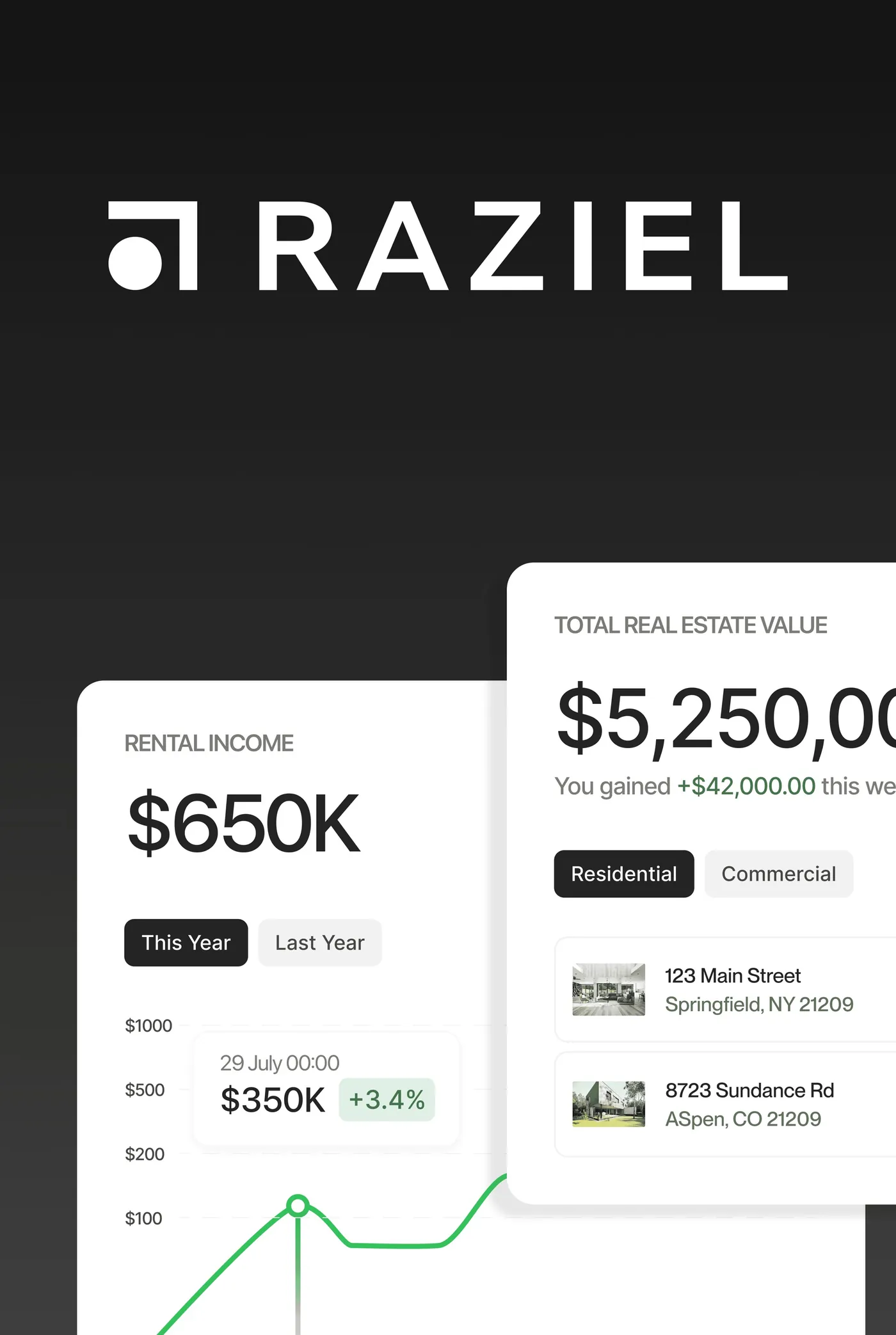
These are design decisions as much as engineering ones. When we incubated Raziel, an AI dashboard that reads investor documents and models taxes and cash flow, document processing was the core workflow, so how much of each document reaches the model is a product question, not an afterthought. The trust side of the same decisions is in designing AI products users trust.
 Case study · RazielEvery alternative investment, in one place.See the work
What to decide on your scope call
If you are planning a first AI product, bring these questions to scoping, alongside features and screens:
- What is the one AI action users take most often, and roughly how many tokens does it need?
- Which tasks need a large model, and which could a small one handle?
- Does any customer require data to stay on their own infrastructure? That decides between APIs and open weights early.
- What is an acceptable model cost per active user, given your pricing?
Model costs are one input to the overall budget. Our guide on what an MVP costs shows what moves the price of the build itself, including how much AI and integration work sits underneath.
The takeaway
Mistral Large 4 is one more sign that raw model prices keep falling and that strong open weights are here to stay. For a startup, that makes the model the easy part of the bill and the product design the hard part. Estimate cost per user action before you build, cache what repeats, route easy work to small models, and keep a path to open weights in your back pocket. If you want a senior crew to scope your AI product with the costs designed in from the start, book a scope call.
Questions founders ask
How much does it cost a startup to run an LLM?
It depends on how many tokens each request uses, how many requests you serve and which model you call. Estimate it per request first: tokens in times the input price plus tokens out times the output price, then multiply by expected daily usage.
Is it cheaper to self-host an open-weight model than to use an API?
Rarely at the start. Open weights give you control and a way out of vendor lock-in, but a trillion-parameter model needs serious GPU infrastructure and people to run it. Most early startups pay less per month calling a hosted API until usage is large and steady.
What does Mistral Large 4 cost through the API?
Mistral lists $0.70 per million input tokens, $0.07 per million cached input tokens and $2.10 per million output tokens for Mistral Large 4.
Can I use Mistral Large 4 in a commercial product?
Mistral says the model is free to use, modify, fine-tune and commercialize under its open-weight license. Companies that offer the model itself as a service must get a separate commercial license from Mistral first.
How do I keep LLM costs down in an MVP?
Send fewer tokens, reuse cached prompts, route easy tasks to smaller models, cap output length and measure cost per user action from the first week.