CPG Branding Agency: What You Get and How to Choose One
A consumer brand has to sell on a shelf, a product page, a retailer's desk and a phone screen, often in the same week. Here is what the right branding partner builds for that, and how to tell who can do it.
A CPG branding agency should give you more than a nice box. A consumer packaged goods brand has to sell in a second on a crowded shelf, in a thumbnail on a product page, on a sell sheet in a retail buyer's inbox and in the social posts that bring people to your store. The right agency builds one identity that works in all of those places, designs the packaging as part of it, and hands you a system your team can extend to the next flavor without starting over.
This guide covers what a CPG branding partner actually delivers, how to judge one before you sign, what the process looks like and what it costs. It comes from the brand identity work we have done for consumer brands like DrinkAde, BeatBox and Stacked Sauces.
What a CPG branding agency actually does
Most founders come in asking for a logo and a label. What a new consumer brand needs is closer to this:
- Positioning. Who the product is for, what job it does and why it is different from the dozens of products next to it. Every design choice later gets tested against this.
- The identity system. Name (if you need one), wordmark, color, type, illustration or photo style, and the rules for how they flex.
- Packaging as a system. A front of pack that passes the shelf test, a structure for flavors or sizes, and the back of pack layout for claims, nutrition and legal copy.
- The store. Product pages, bundles and a checkout flow, often on Shopify, that look like the package and sell as well online as it does in person.
- Retail and sell-in. In-store displays, shelf talkers, a sell sheet and a deck for buyers, distributors and investors.
- Launch content. Social templates, campaign graphics and photography direction, so the launch does not depend on one designer making every post by hand.
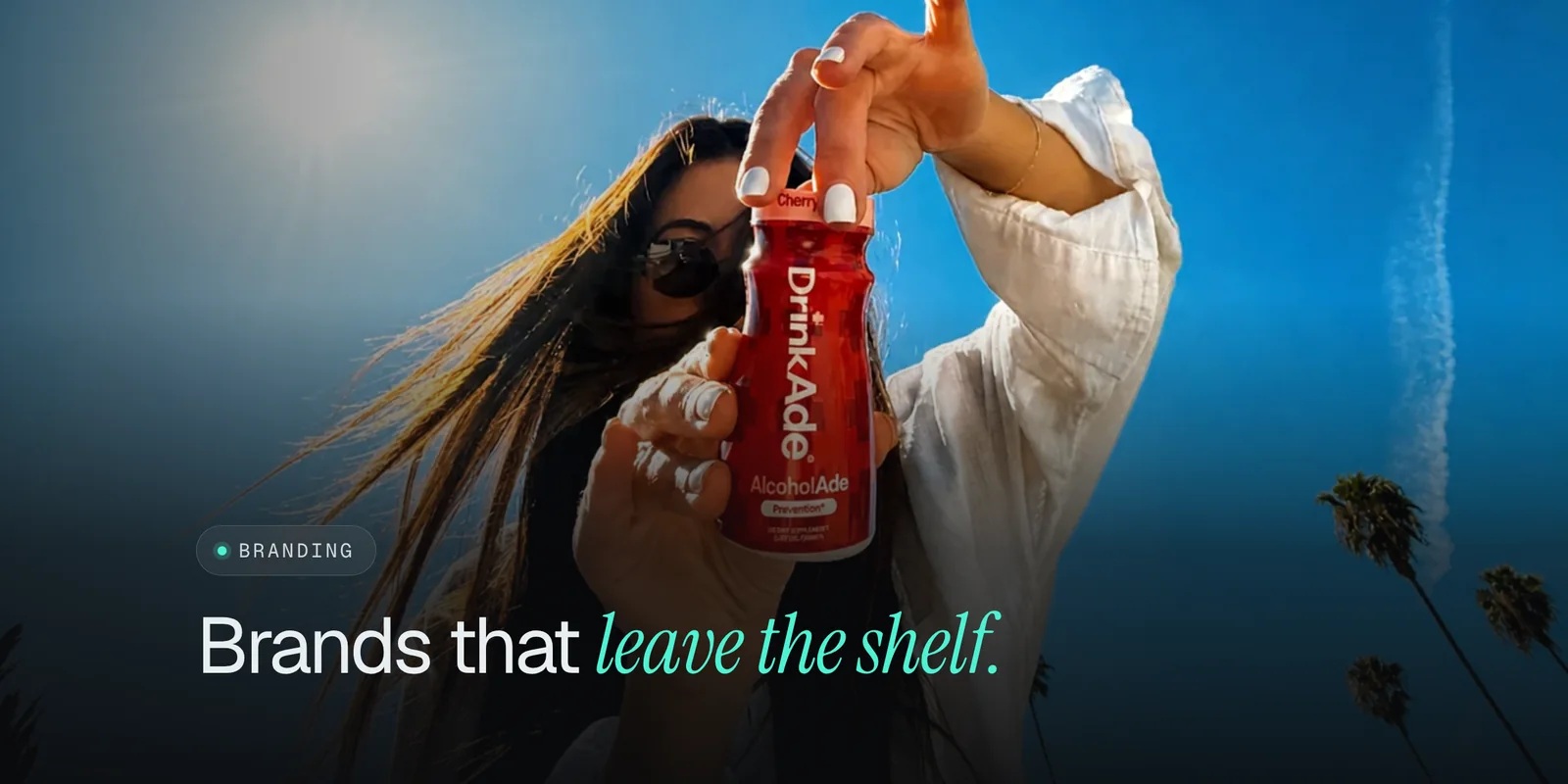
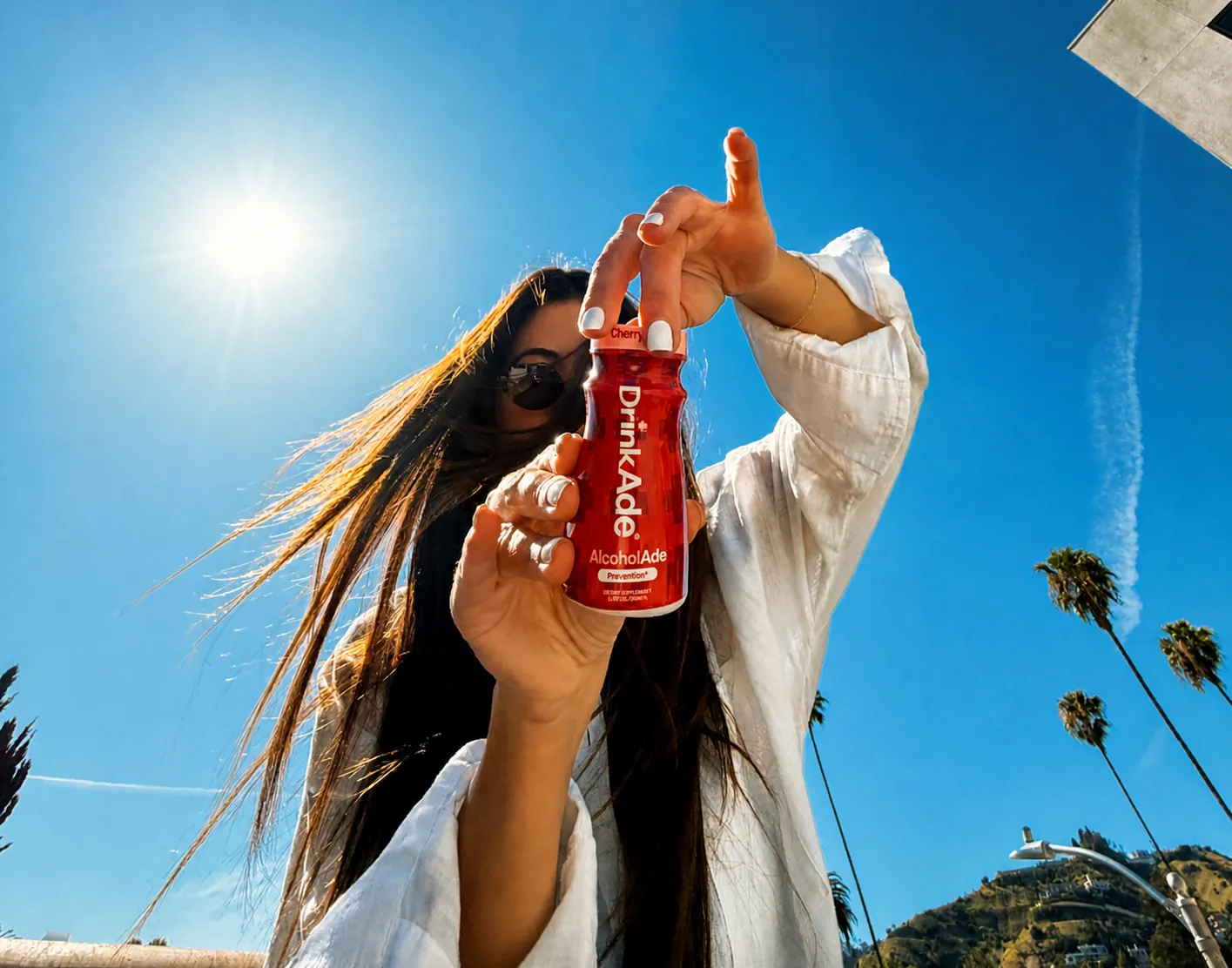
DrinkAde is a good example of the full scope. We built the brand end to end: the identity, a color-coded bottle system for Berry Boost, Cherry Ice and Lemon Lime, the Shopify site, point-of-sale displays for retail and a steady stream of social and launch collateral.
 Case study · DrinkAdeCelebrate the night, own the morning.See the work
Why CPG branding is a system, not a package
A software startup can fix a weak screen next week. A CPG brand prints its labels by the thousand. That changes how the work should be done.
Design for the line, not the first product
Your first product is a design. Your third is a system. Fix the parts that say who you are, such as the logo, layout and type, and let one or two parts change per flavor or size, usually color and an illustration. We go deep on this, plus the shelf, thumbnail and blink tests, in our guide to beverage packaging design.
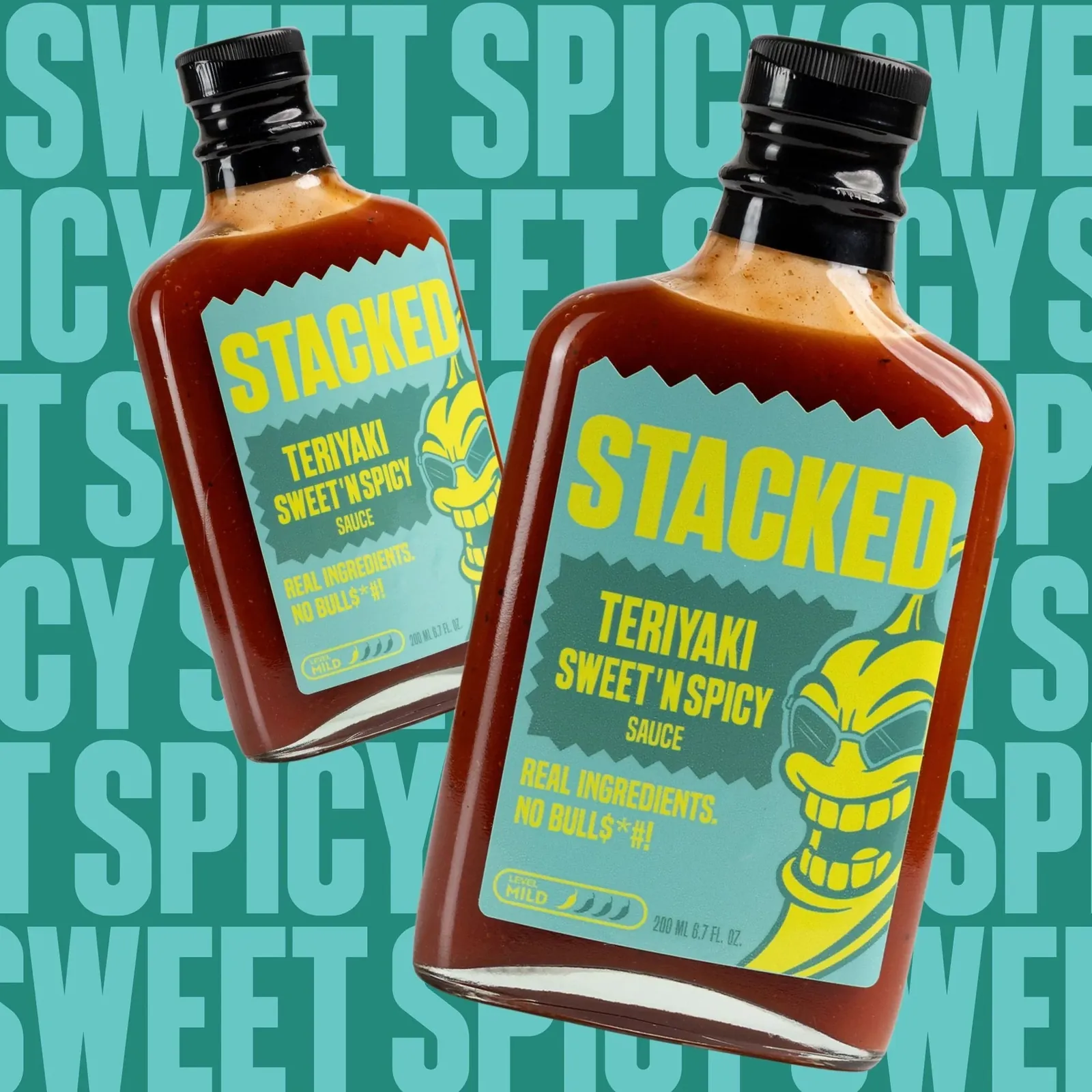
Stacked Sauces shows why it matters. The line has eight signature flavors, and every one gets its own color and character inside one bottle system, so the brand still looks premium on a shelf, a grill and a TV set.
Design for every channel at once
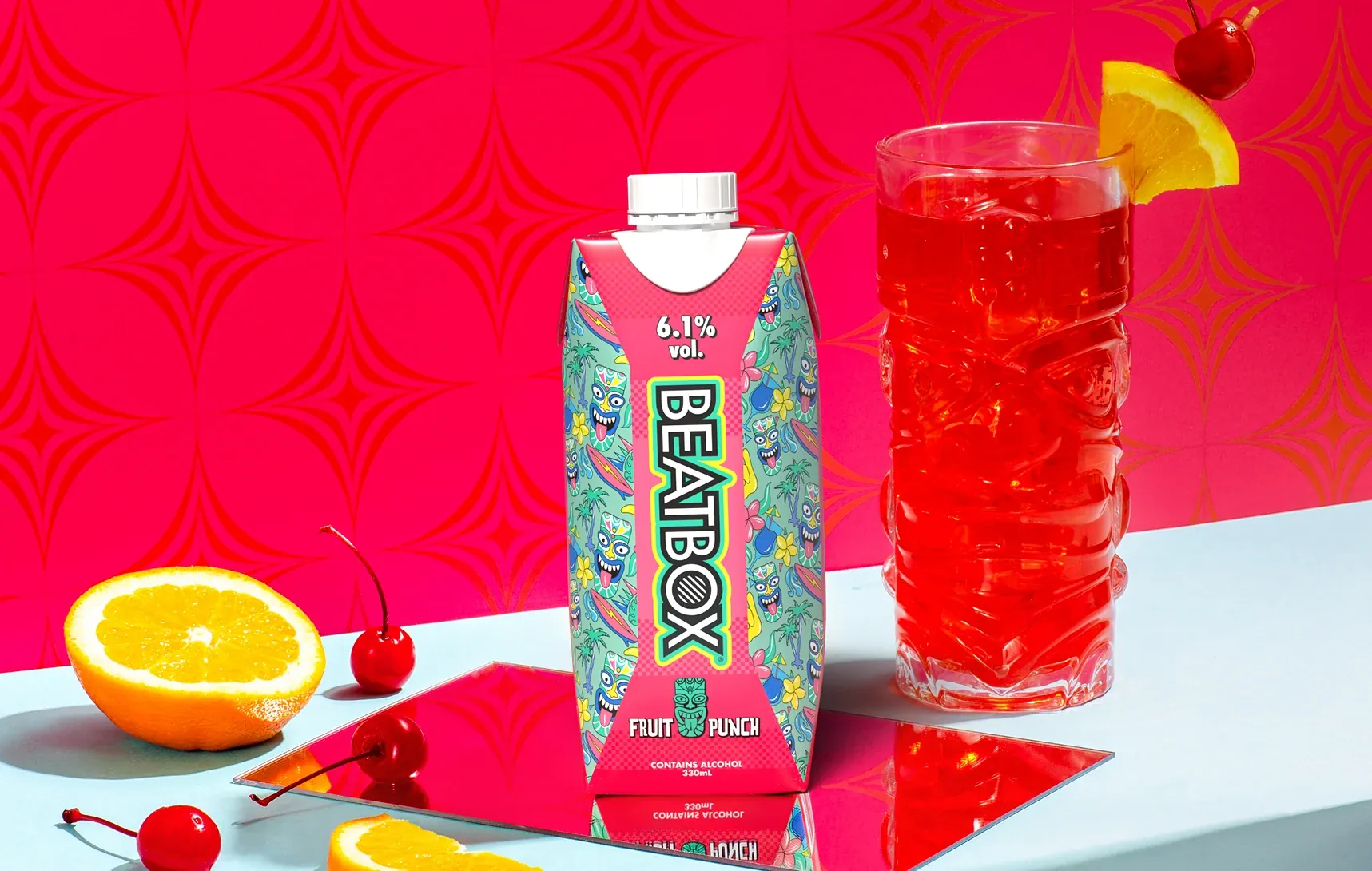
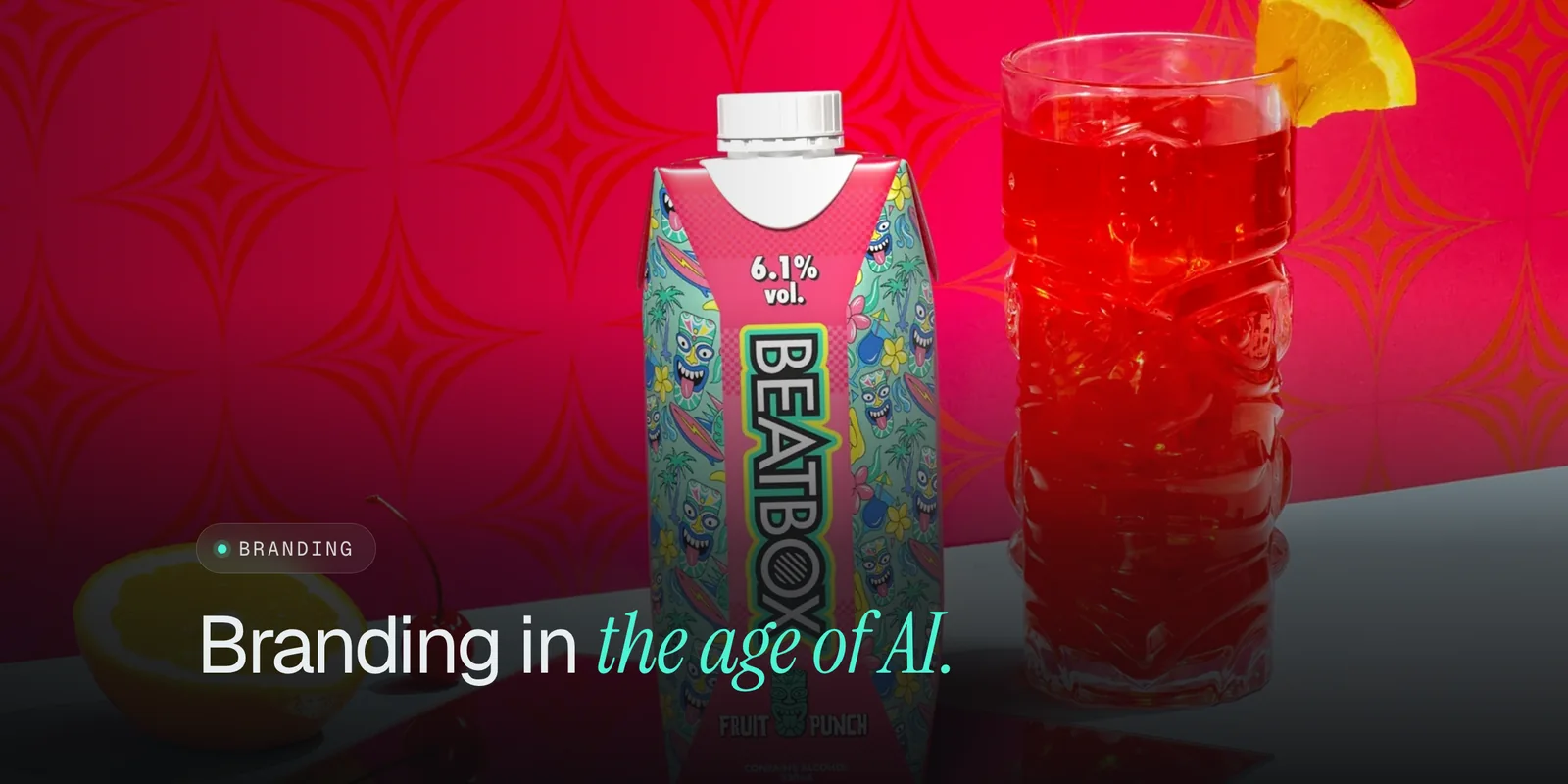
A brand that looks right on a can and wrong on a product page will lose the shopper who found you on their phone. The identity should be tested on the package, a store page, a social post and a display while it is being designed, not adapted afterward. For BeatBox, the brief covered all of it from an early stage: a vibrant identity built around music, fun and community, packaging that says party in a box on the shelf, and a fast website that tells the story and drives sales around the clock.
How to choose a CPG branding agency
Plenty of studios can make a beautiful logo. Fewer have shipped consumer products that sit on real shelves. Before you hire, ask these questions:
- Can I see work that is on shelves now? Ask for products you can buy, not concepts. Look at how the packaging reads from a distance and as a small image online.
- Have you built a product line as a system? Ask to see a brand with three or more flavors or SKUs, and how a new one gets added.
- What do you deliver beyond the package? If the answer stops at print files, you will be hiring a second team for the store, displays and launch content, and the brand will drift between them.
- Who does the work? Find out whether the senior people in the pitch are the people on your project.
- How long does it take, and what is fixed? Get a timeline with phases and a price agreed before the project starts.
- How do you handle label rules? A good partner plans the back of pack around the claims, nutrition panel and legal copy your category needs, and expects a regulatory expert to review the final label before you print.
Be wary of anyone who promises sales results. Branding can earn the pick-up and make a product easy to recommend, but distribution, pricing, the product itself and the founder's hustle decide the rest.
What the process and timeline look like
At King Tide, a brand identity runs four to eight weeks in four phases:
- Week 1, Discover. Founder interviews, a market audit and a sharp positioning statement.
- Week 2, Define. Name if needed, the story and creative territories to react to. If you are still choosing a name, our guide on how to name a startup covers the checks to run.
- Weeks 3 to 6, Design. The identity system, applied across packaging, web, deck and social while it is designed.
- Weeks 7 to 8, Launch. Guidelines, templates, site and launch assets delivered.
Plan printing and production time on top of the design schedule. Printers, co-packers and retailers all run on their own calendars, and a retail launch date is usually set by them, not by the designer. Leave room for a press check or a printed proof before the full run.
How much does CPG branding cost?
Prices vary widely between freelancers, small studios and large consumer agencies, so compare what is included, not just the number. At King Tide, a brand identity project is $3,500 and covers strategy, the identity system and guidelines. Packaging is scoped and quoted up front alongside it, because the number of products, sizes and formats changes the work. Our guide to brand identity cost breaks down what moves the price.
After launch, most consumer brands keep needing design: new flavors, seasonal drops, retail displays, campaigns and social. Stacked, for example, runs a stream of campaign graphics for drops, holidays and TV moments. That kind of steady work fits a monthly design team, from $3K a month, better than a new project every time.
What to have ready before you hire
You will get better work, faster, if you bring:
- The product facts. Formats, sizes, flavors at launch and the ones planned next.
- Where you will sell first. DTC, a regional retailer, a marketplace or all three. It changes what the package has to do.
- The shelf you will sit on. Photos of the actual aisle or cold case, and the brands next to you.
- The required copy. Claims, ingredients, nutrition or supplement facts, and any certifications you plan to carry.
- Deadlines from partners. Printer lead times, retailer resets and your launch date.
The takeaway
Hire a CPG branding agency that designs the identity and the packaging together, proves its work on real shelves, builds product lines as systems and carries the brand into your store, displays and launch content. Get a fixed scope and timeline before you start, and plan printing time around the design schedule. If you are launching a food, drink or other consumer brand, tell us about it.
Questions founders ask
What does a CPG branding agency do?
A CPG branding agency builds the identity of a consumer packaged goods brand and applies it everywhere the product sells: packaging, the online store, marketplace listings, retail displays, sell sheets, social and the investor or buyer deck. The best ones design the packaging and the identity together, so the brand works on the shelf from day one.
How do I choose a CPG branding agency?
Look for consumer work that is actually on shelves and selling, ask to see a flavor or product line they built as a system, and check that they can carry the brand into your store, displays and launch content, not just the front of a box. Ask who will do the work and how long it takes.
How long does CPG branding take?
At King Tide, a brand identity takes four to eight weeks from kickoff to guidelines. Packaging is designed alongside the identity, and printer files, displays and launch content follow once the system is set.
How much does a CPG branding agency cost?
At King Tide, a brand identity project is $3,500, covering strategy, the identity system and guidelines. Packaging is scoped and quoted up front alongside it, and ongoing flavors, displays and campaigns can run through a monthly design team from $3K a month.